Deterministic EU AI Act control infrastructure, not static compliance documentation
Logik Systems is deterministic EU AI Act control infrastructure. It connects structured AI system inventory, block-based governance execution, evidence-backed workflows, recurring review logic, audit visibility, role-based access integrity, and verified enterprise execution paths inside one system architecture.
How access works
Access is not created through open trial behavior. New organizations enter through a written-first flow designed for controlled enterprise activation.
- Written intake captures commercial and operational context.
- Automated qualification filters for serious implementation intent.
- Qualified requests enter gated checkout instead of open trial access.
- Successful payment can trigger provisioned workspace activation and magic link access.
This keeps workspace creation tied to accountability, billing state, and controlled onboarding rather than exploratory browsing.
Governance starts with structured system inventory
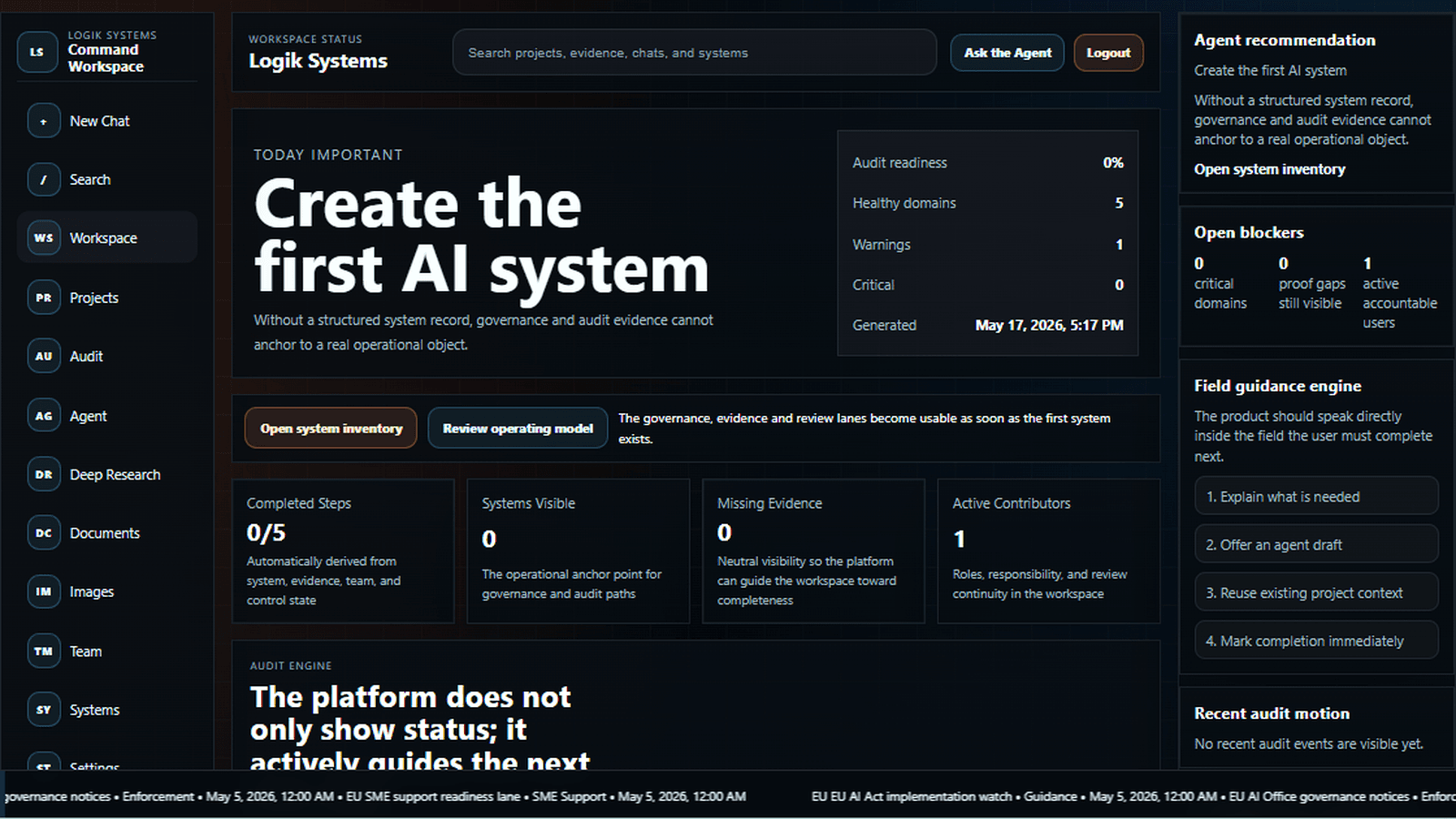
AI systems are represented as structured operational records inside an organization-scoped workspace. Governance does not begin with a disconnected document set. It begins with explicit systems that can be owned, reviewed, and controlled.
- Organization-scoped workspace structure
- Plan state and enterprise activation visibility
- Role-based member access and invite flow
- Admin access overview tied to operational actions
The result is a system surface that can carry governance state, evidence, and review continuity over time.
Access control is tied to accountability
Responsibility and access are not implicit. Membership state, role assignment, invite logic, revocation, and protected current-session handling are visible in the operating layer.
- Roles such as ADMIN, COMPLIANCE_MANAGER, AUDITOR, and VIEWER
- Membership lifecycle including INVITED, ACTIVE, and REVOKED
- Protected current-session access constraints
- Explicit invite and revoke controls for organizational access management
This ensures that governance responsibility can be connected to real user access, rather than remaining a loose administrative assumption.

Governance is broken into operational control units
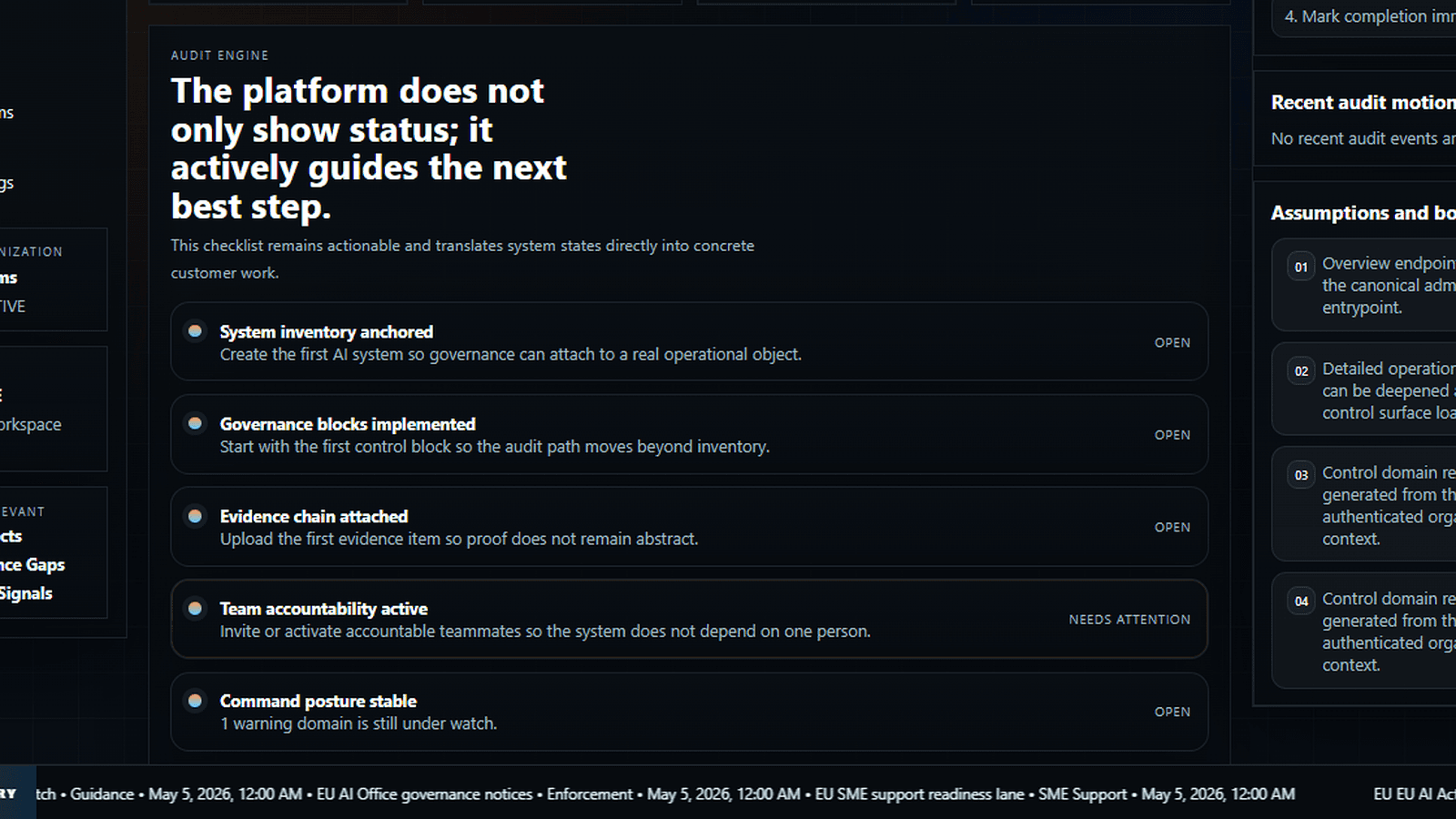
Governance is not handled as a monolithic policy artifact. It is decomposed into concrete blocks with implementation status, ownership, description quality, and evidence attachment.
- Block-level implementation status
- Responsible role assignment
- Evidence upload directly tied to governance elements
- Operational handling of implemented and non-implemented controls
This turns governance into a working structure instead of a static documentation exercise.
Reviewable history is part of the operating layer
Operational events are visible in reviewable history rather than disappearing into undocumented process gaps. This matters because auditability fails when action history is fragmented or invisible.
- Invite and membership lifecycle events
- Governance block update visibility
- Evidence-related activity traceability
- Timestamped review surface for operational accountability
Audit visibility is therefore not a reporting afterthought. It is embedded into the governance operating surface.
Evidence is versioned, signed, and integrity-verifiable
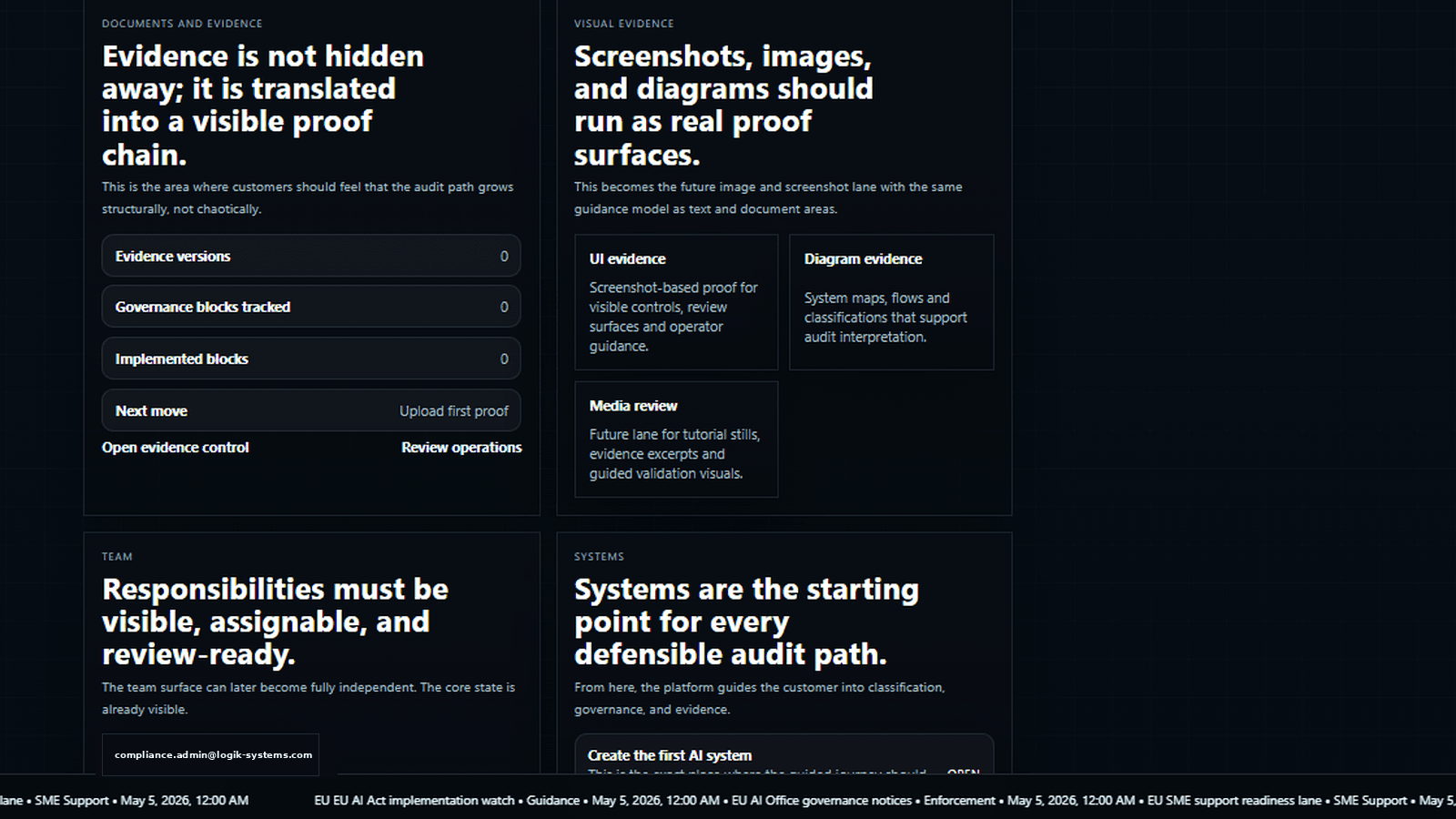
Evidence handling is designed to close the proof chain. Objects are versioned, access can be signed, and integrity can be checked through SHA-256 verification rather than asserted informally.
- Immutable evidence history
- Signed access view for controlled retrieval
- SHA-256 verification of expected versus calculated hash
- Operational proof that the evidence chain closes technically
This is the difference between storing files and maintaining an evidence-backed governance record.
This is not a documentation tool
- Policies exist, but system inventory is weak
- Evidence is fragmented across files and folders
- Responsibilities stay implicit
- Review happens ad hoc
- Auditability is partial and retrospective
- Structured AI system inventory
- Block-based governance implementation
- Evidence-backed workflows
- Role-based access and membership control
- Reviewable history and recurring governance continuity
What this platform already demonstrates and verifies
Enter written intake for controlled workspace activation
Logik Systems is designed for organizations that need deterministic control, evidence handling, audit visibility, access integrity, and verified enterprise execution under real governance conditions.
New workspaces do not open through generic demo behavior. They enter through written-first qualification and gated enterprise progression.